
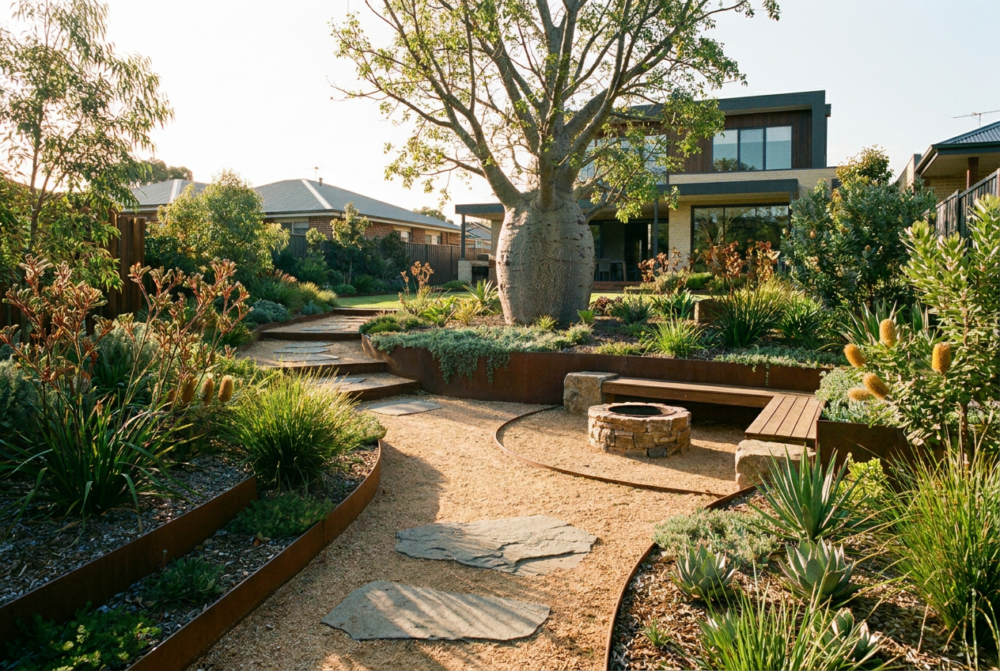
Most backyard problems aren’t really plant problems — they’re layout problems. You can grow beautiful, healthy plants and still end up with a garden that feels awkward to use, because the bones of it weren’t thought through first. Here are the five mistakes I see (and made myself) most often.
1. Planting before planning
It’s tempting to buy whatever looks good at the nursery and find it a spot later. The problem is you end up with a garden that grew by accident rather than by design. Before you plant anything new, sketch — even roughly — where you actually walk, sit, and spend time, and let the planting follow that, not the other way around.
2. Ignoring how the space will actually be used
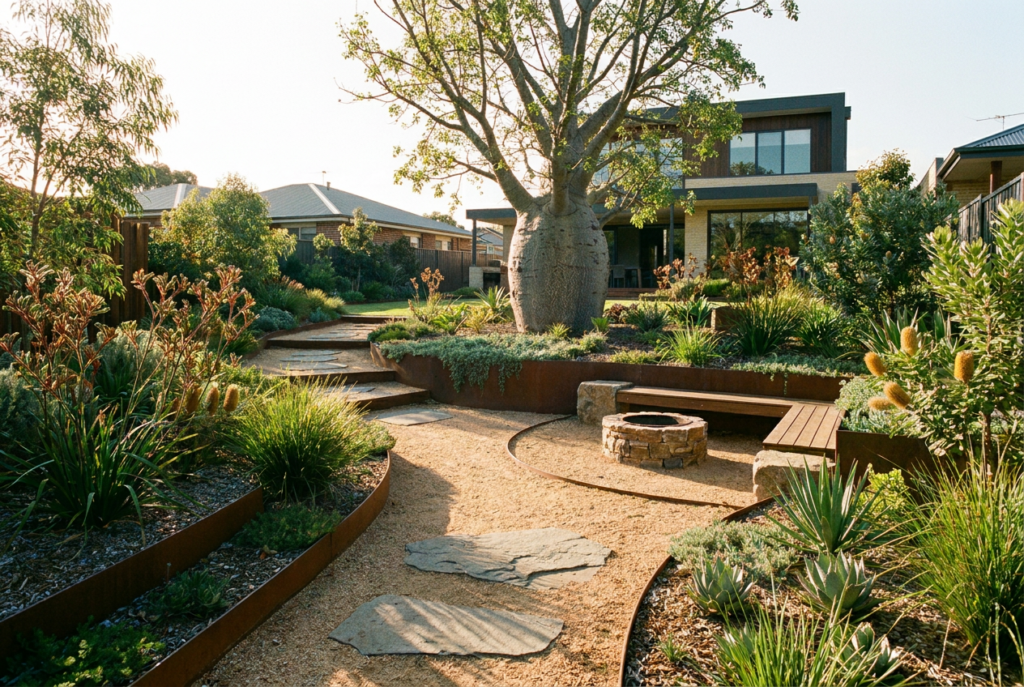
A garden designed purely to look good in photos often fails at the basics: nowhere to put a bin on collection day, no shade where you’d actually want to sit at 4pm, a path too narrow for a mower. Walk your own routines through the space before finalising anything.
3. Straight lines everywhere (or none at all)
Gardens that are all hard right angles can feel stiff; gardens with no structure at all can feel messy. A mix works best — a few clean, deliberate lines (a path, a bed edge) balanced against looser, more natural planting.
4. Forgetting about scale as plants mature
That lovely (and cheap) 30cm shrub from the nursery might be 2 metres wide in three years. Planning for a garden’s mature size, not its nursery size, is the single biggest thing that separates gardens that feel considered from ones that feel overgrown and chaotic by year three. Yates Australia publishes reliable mature-size guides for most common Australian garden plants, worth checking before you buy.
5. No clear “anchor” points
A garden with no visual anchor — a specimen tree, a defined seating area, a feature bed — tends to feel like a collection of plants rather than a designed space. Even one strong anchor point gives the eye somewhere to land and makes everything else feel more intentional.
The fix, in short: slow down before you plant. An afternoon spent thinking about how the space will actually be used saves years of moving things around later. If you’re planning a bed specifically for cut flowers, our guide to easy cut flowers for beginners is a good next stop, and if food is part of the plan too, see our Food & Kitchen Gardening hub.