
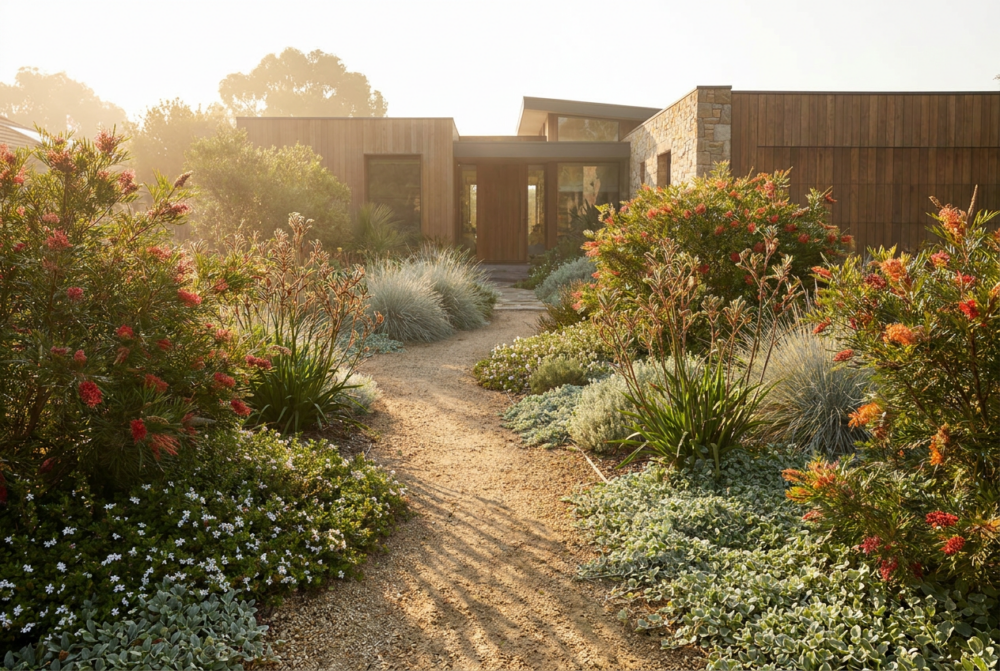
A front garden is usually the most visible, least-used part of a block — which makes it the perfect place to go low-water and native, rather than pouring effort into a lawn nobody actually sits on.
Start with structure, not colour
Native garden design works best when you think in layers — a few taller structural shrubs or small trees, mid-height fillers, and a groundcover layer — rather than shopping for whatever’s flowering at the nursery that weekend. This mirrors the anchor-point advice in our garden layout mistakes guide.
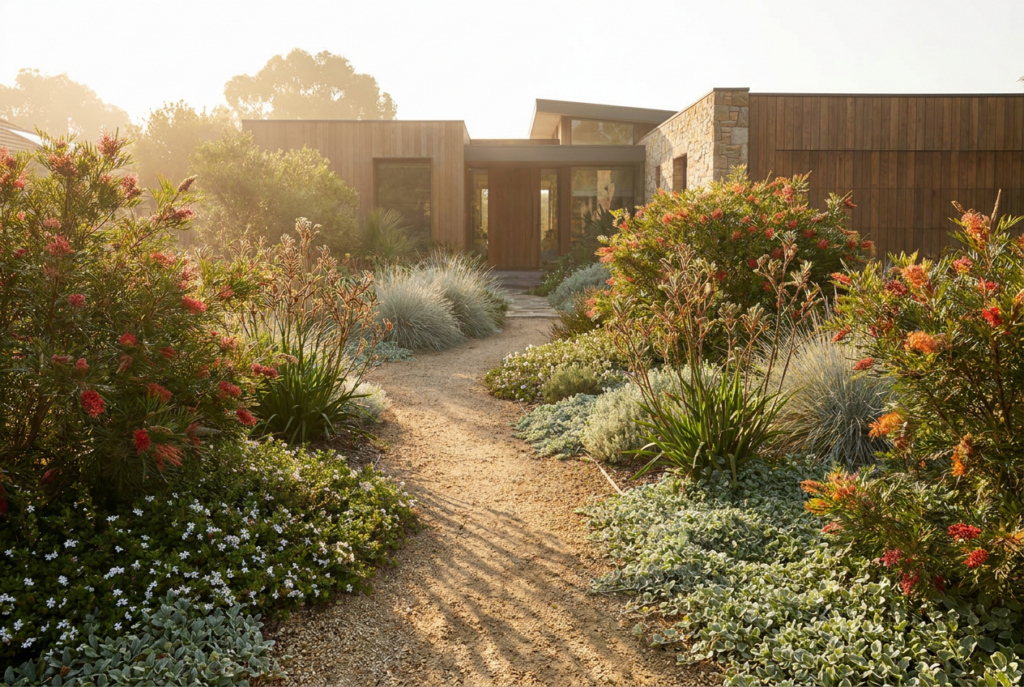
Good low-water natives for a front garden
Grevillea and westringia both make excellent structural shrubs; kangaroo paw and native grasses (like lomandra) work well as mid-height fillers; and dichondra or native violet make tough, attractive groundcovers that need far less water than turf.
Mind the soil, not just the plants
Many Australian natives actually prefer lower-nutrient soil than exotic ornamentals — heavy feeding or rich garden mix can do more harm than good. This is one of the few cases where less intervention genuinely produces better results.
Add some flowers for cutting too
A native front garden doesn’t have to be purely ornamental — several of the natives covered in our native flowers for the vase guide double beautifully as low-water front-garden planting and as cut flowers for indoors.
Water restrictions become a non-issue
Once established (generally after the first year), a well-chosen native front garden needs little to no supplementary watering even through restrictions — one of the most practical long-term benefits for any Australian household.