
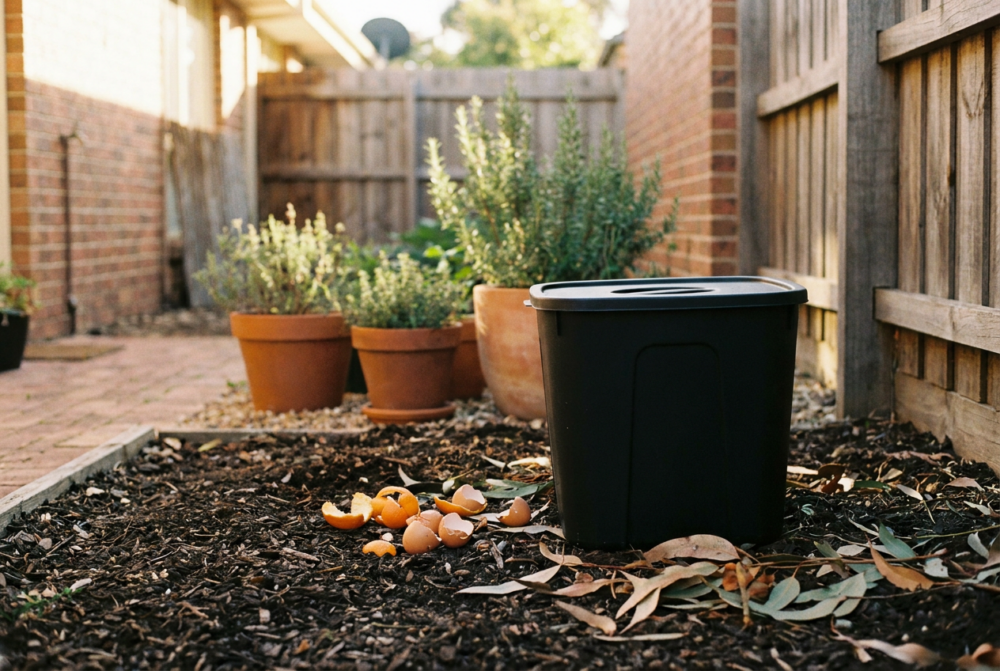
Composting has an image problem of its own — a lot of guides assume you’ve got room for a bulky tumbler or a three-bay timber system, which simply isn’t realistic for a small courtyard, a rental, or a compact suburban block. You don’t need any of that to compost properly.
A simple bin is enough
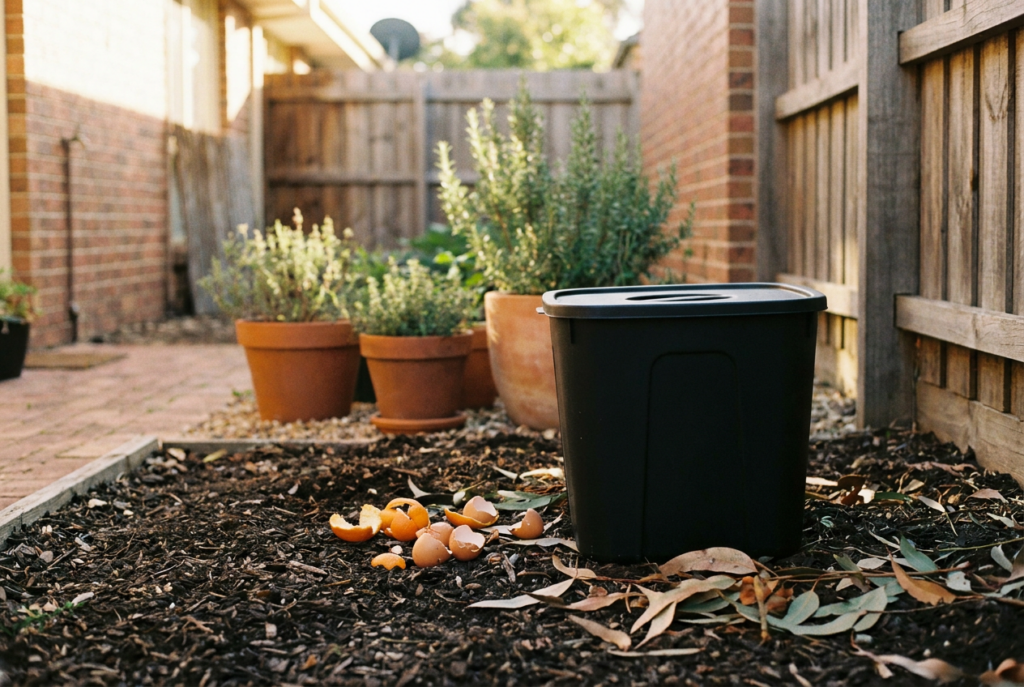
A basic enclosed compost bin (the bottomless plastic kind, sitting directly on soil) takes up barely more space than a wheelie bin and works perfectly well for most households. No turning mechanism required — an occasional fork-through is all it needs.
Worm farms for very tight spaces
If even a standard bin feels like too much, a worm farm is a genuinely compact alternative — stackable, doesn’t smell if managed properly, and produces excellent liquid fertiliser as a bonus. Well suited to courtyards, balconies, and small rental gardens.
Bokashi for kitchens without any outdoor space
Bokashi fermenting buckets can even handle cooked food scraps and dairy, which regular composting can’t, and the whole system fits under a kitchen sink. It ferments rather than composts in the traditional sense, but the end product still enriches soil beautifully once buried.
What actually goes wrong
Most small-space composting failures come down to one of two things: too much wet kitchen waste and not enough dry “brown” material (shredded paper, dry leaves), or a bin that’s been left completely undisturbed for months. A rough balance of roughly equal wet and dry material, checked every couple of weeks, solves almost every common problem.
Whatever system you choose, the compost you produce is one of the best free inputs you can give a vegetable bed — see our beginner vegetables guide for what to grow in it first.