
Companion planting has a reputation problem — half of what circulates online is folklore rather than anything tested, and it puts a lot of new gardeners off the idea entirely. That’s a shame, because a handful of companion pairings genuinely do work, for reasons that hold up (pest confusion, root structure, nutrient needs), and they’re worth knowing.
Basil and tomatoes
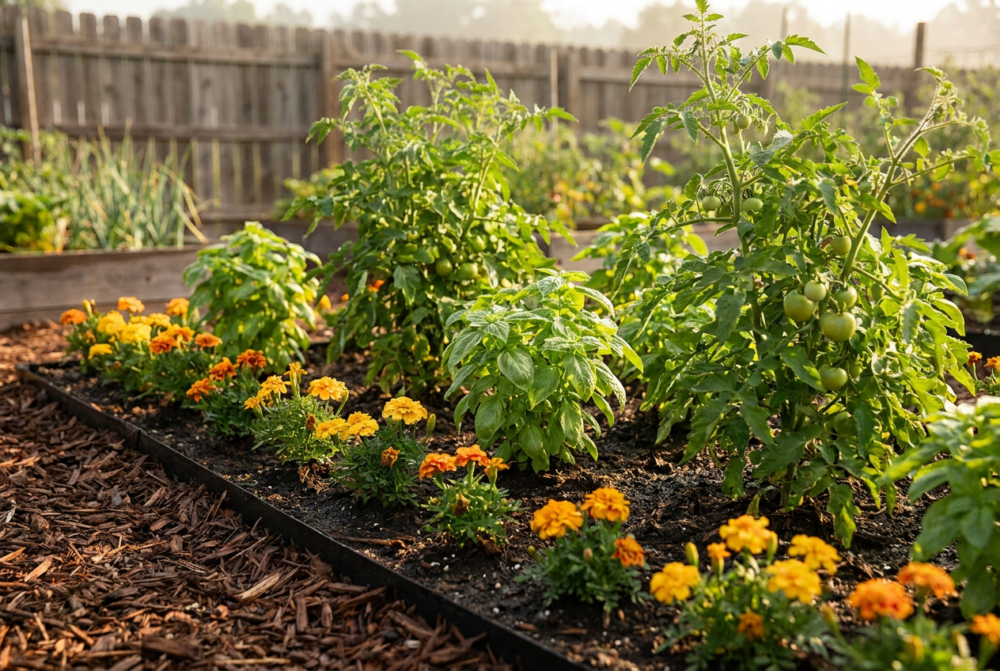
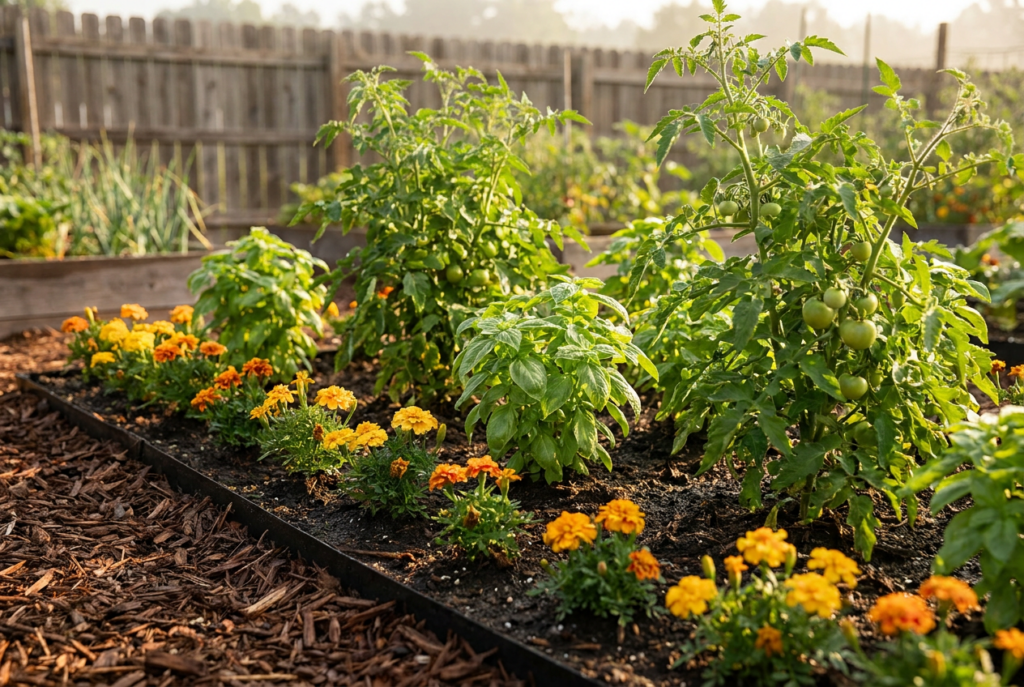
The classic pairing, and one of the few with genuine pest-confusion logic behind it — basil’s strong scent can help mask tomato plants from some pests, and the two simply grow well together in the same conditions, which counts for a lot practically speaking.
Marigolds near almost anything
Marigolds release compounds from their roots that can deter certain nematodes in the soil, and their strong scent puts off some above-ground pests too. They’re also just easy, cheerful, low-cost plants to tuck in around garden bed edges.
Beans and corn
Beans fix nitrogen in the soil, which corn (a hungry feeder) genuinely benefits from. Corn stalks also give climbing beans something to grow up. This is one of the oldest documented companion pairings and one of the most reliably useful.
What doesn’t hold up
Be sceptical of long lists claiming dozens of specific pairings with precise effects — much of that is repeated folklore without evidence behind it. If a claim sounds oddly specific (“plant X exactly 15cm from Y to repel Z”), it’s worth treating cautiously rather than rearranging your whole garden bed around it.
What to avoid planting together
The more useful side of companion planting is often about what NOT to plant close together — heavy feeders competing for the same nutrients, or plants with very different watering needs sharing a bed. This matters more for layout than most people realise; see our guide to common garden layout mistakes for more on planning beds properly from the start.