
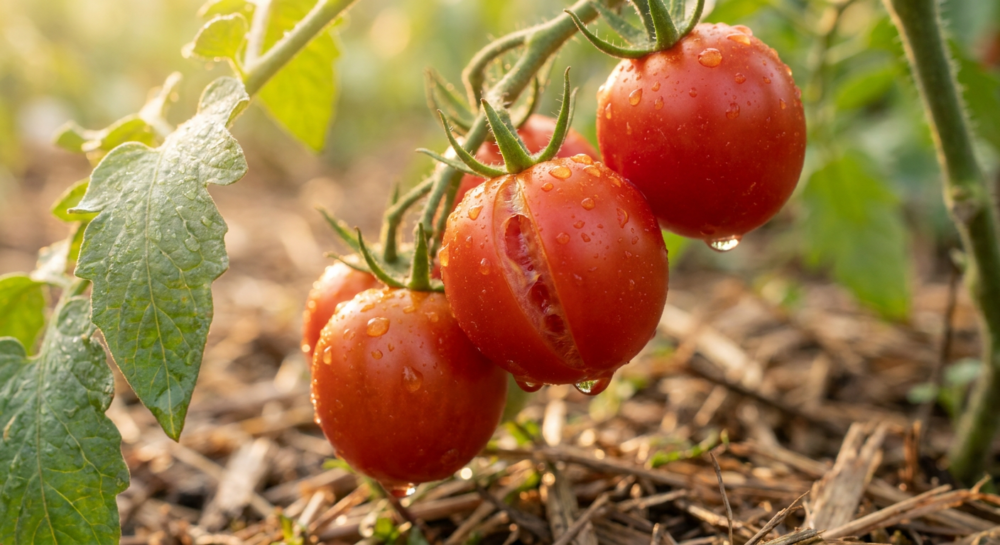
You water conscientiously, you feed regularly, and then one morning you walk out to find perfectly good tomatoes with cracks running across their shoulders like tiny earthquakes. It’s one of the most common questions new vegetable growers ask, and the good news is it’s almost always fixable once you understand what’s actually causing it.
What’s actually happening
Splitting is almost always about inconsistent water, not too much or too little on its own. When a dry spell is followed by a heavy soak (a big rain event, or you finally remembering to water), the fruit takes up water faster than the skin can stretch to accommodate it, and it splits. In Australian summers, where a fortnight of dry heat followed by a sudden downpour is entirely normal, this is one of the most common frustrations home growers face.
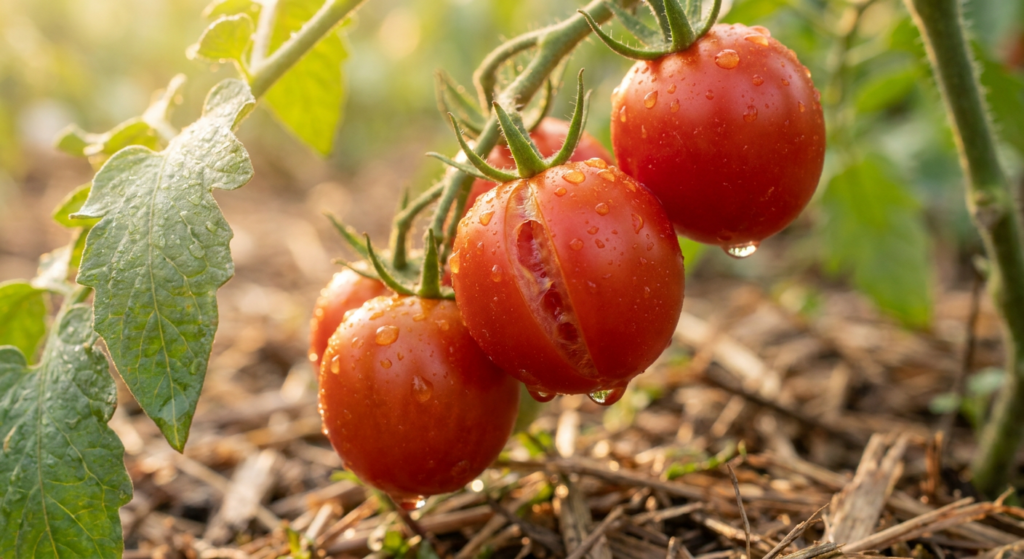
The fix: consistency, not quantity
The single biggest improvement is watering on a steady schedule rather than reactively. Deep, even watering two or three times a week (rather than a quick daily sprinkle, or nothing until the plant looks stressed) keeps the moisture level in the soil far more stable.
Mulch matters more than people think
A good 5–7cm layer of mulch around your tomato plants buffers the soil against exactly the kind of moisture swings that cause splitting. It’s one of the cheapest, lowest-effort fixes available and it helps with weed suppression too.
Variety choice helps too
Some varieties are simply more prone to splitting than others — thinner-skinned heirlooms in particular. If splitting is a recurring problem in your garden, cherry varieties (see our beginner vegetables guide) tend to be more forgiving than large slicing tomatoes.
When to just pick them
If you see rain coming after a dry stretch, it’s often worth picking any nearly-ripe tomatoes before the rain hits and letting them finish ripening on the windowsill — a small, practical workaround that saves a lot of splitting damage during unpredictable weather. For more on building resilient soil that holds moisture more evenly in the first place, Sustainable Gardening Australia has good free guides on soil improvement.